Trivara

Why Puri?

Why Puri?

Puri.
A City Like No Other.

Where the Lord of the Universe watches over a sea-kissed shore. A rare city that has been sacred for a thousand years — and is only now becoming a destination for the world.

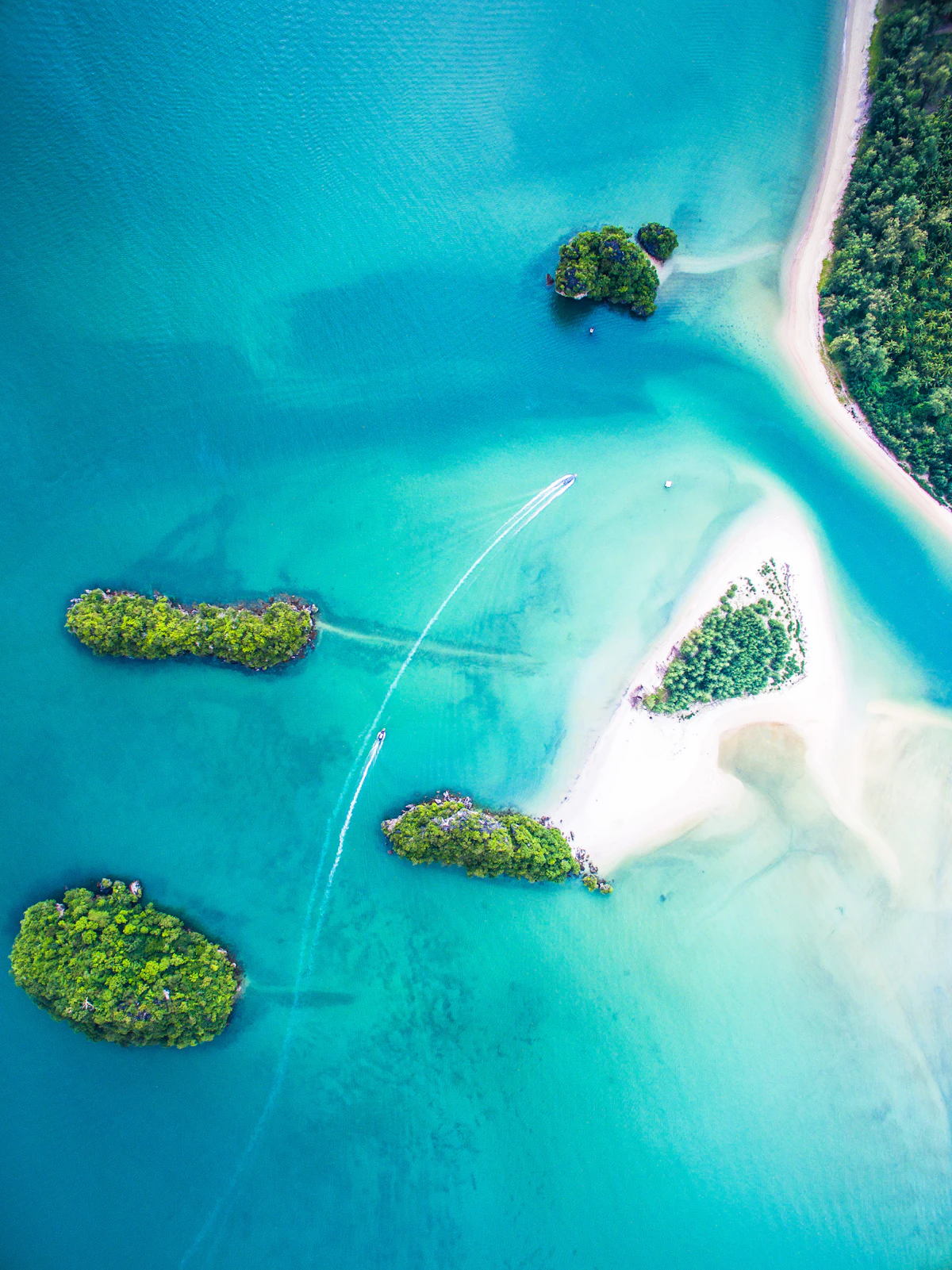
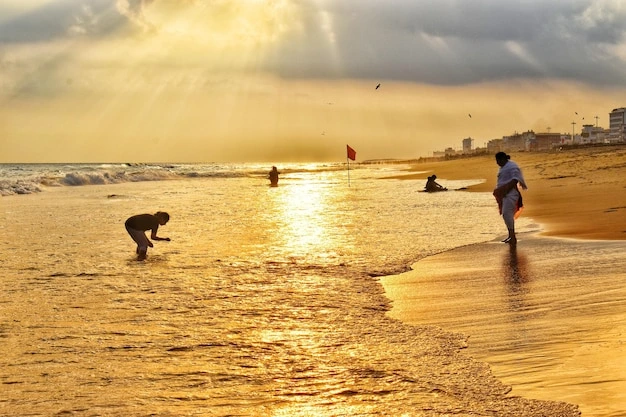
Beautiful coastal view representing Puri shore

Where spirituality meets the shoreline

A premium location story powered by faith, culture, sea views, and future growth.

Why Puri stands apart

Every city has its reasons. Puri has a story — one that began before history was written, plays out in the present with billions in government investment, and promises a future that few Indian cities can match.

Every city has its reasons. Puri has a story — one that began before history was written, plays out in the present with billions in government investment, and promises a future that few Indian cities can match. Here is that story, told honestly.

The Past

A city shaped by faith, trade, and a 900-year-old chariot.

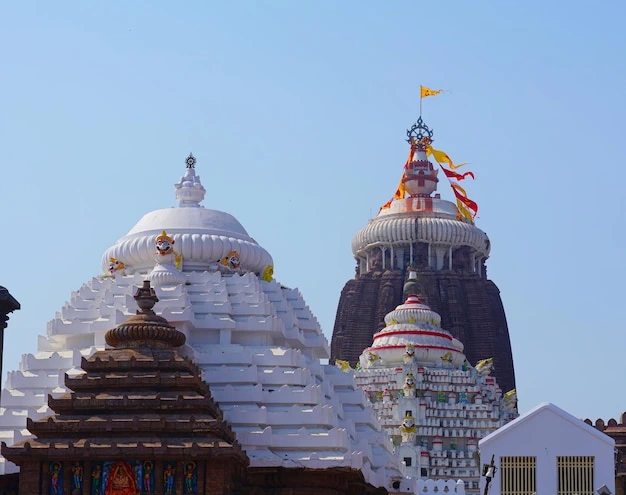
Temple architecture related visual
3rd Century BC onwards

The Ancient Roots

Long before roads and railways, Puri — then known as Purushottama Kshetra — was a destination. Ancient scriptures including the Skanda Purana, Brahma Purana, and Mahabharata mention the sacred significance of this coastal settlement. Lord Jagannath, initially worshipped as Neel Madhava by tribal communities, was already drawing pilgrims from across the subcontinent.

12th Century CE · 1150 AD

The Temple Is Built. The Char Dham Is Complete.

King Anantavarman Chodaganga Deva of the Eastern Ganga dynasty constructs the present Jagannath Temple — a 214-foot tower of Kalinga architecture that still dominates Puri's skyline. In that moment, Puri becomes the eastern anchor of India's sacred geography. Together with Badrinath (North), Dwarka (West), and Rameswaram (South), the Char Dham circuit is complete. Every devout Hindu now has a reason to come East. They always have, and always will.

810 CE · Adi Shankaracharya's Visit

Puri Joins the Philosophical Map of India

Sri Adi Shankaracharya — the monk who reformed Hinduism — visits Puri and founds the Govardhan Math, one of his four great monastic institutions. Puri is no longer just a temple town; it is a seat of learning, philosophy, and Vedantic tradition. Pilgrims come not only to see the Lord, but to think, to question, to transform.

15th–16th Century

The Rath Yatra — The World's Oldest Car Festival

The Rath Yatra — the Chariot Festival — in its current grand form draws royal patronage and international attention. Foreign traveller Ibn Battuta writes of witnessing enormous chariots pulled by tens of thousands. The English word "juggernaut" is born from "Jagannath" — a testament to how this festival captured the imagination of the entire world. The festival continues unbroken to this day, drawing over a million devotees in a single week.

Colonial & Modern Era

Discovery as a Beach Destination

British administrators "discover" Puri beach as a summer retreat. Railway connectivity arrives in 1897, making Puri the first seaside destination in Eastern India accessible to the middle class. Bengalis, Marathis, and pilgrims from every corner of India now come by train. Puri quietly becomes a dual-identity city: sacred and scenic, spiritual and recreational.

Spiritual city atmosphere Spiritual Legacy
Sea and beach scenic view Coastal Beauty
Travel and destination mood Future Destination

Two Souls. One City.

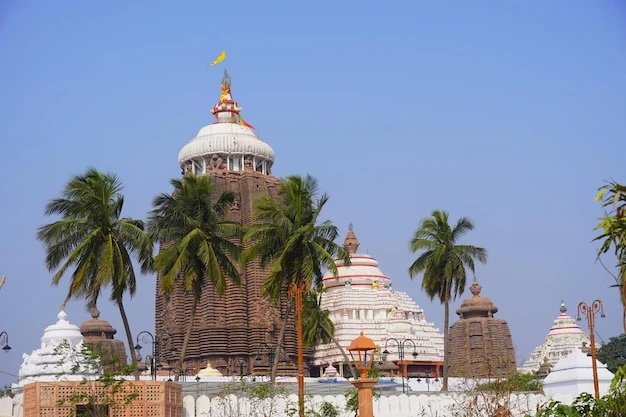
Temple and sacred cultural image
🪔

The Sacred

Char Dham · Moksha · Eternity

Puri is one of the four holiest places in Hinduism — part of the Char Dham circuit that every devout Hindu aspires to complete in their lifetime. This is not a regional temple or a local deity. Lord Jagannath is worshipped across every corner of India, in every language, by every sect.

The temple is not just a building. It runs 56 food offerings daily to the deity in the world's largest temple kitchen. It hosts 24 major festivals annually. It has been standing — invaded, restored, rebuilt — for nearly a thousand years. No earthquake, no storm, no conqueror has permanently silenced this place.

Visiting Puri is not a tourist act. For 1.2 billion Hindus, it is a life goal.

"Puri is among the sacred Char Dham — the four corners of India that every Hindu hopes to visit at least once in their lifetime."
— Adi Shankaracharya's doctrine, 9th century CE
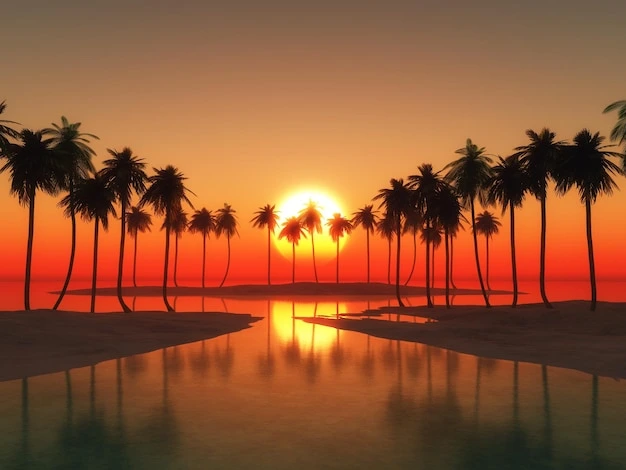
Beautiful coastline image
🌊

The Shore

Bay of Bengal · Sand · Sunrise

Less than two kilometres from the temple, the Bay of Bengal stretches to the horizon. Puri Beach — long, wide, golden — is one of the most visited beaches in Eastern India. It is not a crowded, commercialised strip. It is a beach where families come for sunrise, where devotees wash away their journey, and where the evening sky turns colours that no filter can replicate.

The combination of beach and temple in one walkable city is extraordinarily rare. Rameswaram has a shore but no blue-flag beach culture. Varanasi has the Ganga but not the sea. Dwarka sits on a coast but does not draw leisure tourists the way Puri does. Puri alone offers both — in the same afternoon.

This is why it draws families, honeymooners, solo travellers, and spiritual seekers — all at once.

Puri Beach stretches over 8 kilometres along the Bay of Bengal — one of the longest and widest sandy beaches on India's eastern coast.
1M+
Devotees in a single week during Rath Yatra 2024
₹3,600Cr
Spent on Srimandir Parikrama Heritage Corridor
₹1,000Cr
Cruise terminal announced for Puri (2026)
₹5,631Cr
Proposed Jagannath International Airport investment

The Present

Puri is no longer quietly sacred. It is being transformed, funded, and developed with the urgency of a city that the government knows is about to go global.

🛕
Inaugurated January 2024

Srimandir Parikrama Heritage Corridor

A ₹3,600 crore transformation of the entire temple precinct — creating a 75-metre unobstructed promenade around the Jagannath Temple. Modelled on Varanasi's Kashi Vishwanath Corridor, it includes a 6,000-capacity pilgrim reception centre, cultural centre, multilevel parking, and amenity zones. Footfall has surged since inauguration.

✈️
In Progress · Approvals Secured

Jagannath International Airport

A ₹5,631 crore greenfield international airport spanning 1,164 acres — India's second international airport in Odisha. The Ministry of Civil Aviation has granted site clearance. Defence, DGCA, and NITI Aayog NOCs are in place. Adani Group, GMR, and Fairfax have all expressed interest in development. A six-lane expressway to Bhubaneswar airport will also be built. Once operational, Puri will receive direct international flights for the first time.

🚢
Announced February 2026

₹1,000 Crore Cruise Terminal

Odisha's Deputy Chief Minister announced a ₹1,000 crore cruise terminal for Puri — positioning it as the Bay of Bengal's premier cruise hub. The terminal will attract international cruise liners from the Mediterranean, Southeast Asia, and Europe. A 1,500-acre new city is also being developed in Sipasarubali to support cruise-led tourism growth, with hotels, recreational zones, and commercial establishments.

🏙️
Active

Puri Smart City Mission

Puri is one of India's selected Smart Cities. The ABADHA scheme (Augmentation of Basic Amenities and Development of Heritage and Architecture) has a ₹4,224 crore budget to transform Puri's roads, drainage, tourism infrastructure, heritage buildings, and coastal frontage. This is systematic urban transformation — not ad hoc development.

🛤️
Active Upgrades

Road & Rail Connectivity

NH-316 connects Puri to Bhubaneswar, and ongoing upgrades are reducing travel time. Puri's railway station is one of the most well-connected in Odisha — with direct trains from Delhi, Mumbai, Kolkata, Hyderabad, Chennai, and Bengaluru. The proposed six-lane expressway between Puri and Bhubaneswar airport will eventually bring travel time to under 30 minutes.

🌏
Ongoing

Global Tourism Recognition

Puri is being actively promoted by the Government of India in international tourism campaigns. Rath Yatra has been recognised as one of the world's largest religious processions. The Heritage Corridor has drawn media coverage from BBC, Reuters, and major international outlets. Foreign tourist infrastructure — from signage to hospitality — is being actively upgraded.

Why Puri?

A question every investor and buyer reasonably asks. Here is an honest comparison.

Spiritual significance Puri has a rare identity advantage that cannot be replicated through infrastructure alone.
Holiday-home and visitor demand Its beach, pilgrimage flow, and repeat visits create a naturally broader audience.
Entry-stage opportunity The city is still at a phase where growth drivers are building while perception keeps rising.
Factor Puri
Spiritual Significance Char Dham — One of 4 sacred sites of Hinduism
Tourist Footfall Type Pilgrims + leisure beach tourists + families = perennial demand
Recurring Visitors Devotees return annually for Rath Yatra and festivals
Real Estate Entry Price Still early-stage; lower per-sq-ft compared to Bhubaneswar
Government Infra Investment ₹10,000+ crore in airport, corridor, cruise, smart city
Second Home / Holiday Home Demand Very high — natural holiday home market
Beach Access World-class beach within city
Rental / Hospitality Income Potential High — millions of visitors need accommodation
Forward-looking destination visual

The Future

Here is what most people do not yet know about Puri: the government's investment pipeline is only now beginning to materialise. The Heritage Corridor opened in January 2024. The airport approvals are in place. The cruise terminal was announced in early 2026. The new city on 1,500 acres in Sipasarubali is being planned.

This is a city at the inflection point — where the story is known, the investment is committed, and the price of entry is still reasonable. When the airport opens and international flights arrive, when the cruise ships dock and European tourists walk through the temple town for the first time — the market will look very different from today.

"Puri will be a world-class heritage city. The investments we are making today will ensure that every pilgrim and every tourist — Indian or foreign — has an experience worthy of this sacred place."

— Odisha Government's stated vision for Puri's development

Bhubaneswar's airport already handles 4.8 million passengers annually and has hit design capacity — triggering the need for Puri's own airport. Tourism demand is not theoretical. It is already overwhelming current supply. The question is not whether Puri will grow. It already is. The question is whether you will be positioned when it does.

Positioned between legacy and growth.

Puri is one of those rare places where heritage, tourism, government investment, and emotional value are all reinforcing one another. That is what makes its future especially compelling.

Modern investment and travel growth visual

Whatever Brings You Here, Puri Has an Answer

We built this page for three different kinds of people. You will find your story below.

The Investor

Capital Seeking Long-Term Returns

You are looking at appreciating assets in cities with structural growth tailwinds. Puri offers: government commitment at the ₹10,000 crore scale, a perennial visitor base (not dependent on one industry), an airport that will transform international accessibility, and early-stage property prices before these projects reach completion.

Every city that got a major airport, heritage corridor, and cruise terminal within a decade saw real estate values multiply. Puri's ingredients are all in place.

Entry now. Returns compound as infrastructure delivers.
The Homebuyer

A Family Looking for Meaning in a Home

You want a home that is more than an address. You want the morning walk to a beach. You want your children to grow up understanding what faith looks like in its most magnificent, living form. You want a city where the air smells of the sea, where the nights are peaceful, and where every festival is an event.

Puri gives your family that. And unlike Bhubaneswar — which is a city you move to for work — Puri is a city you choose. That choice says something.

A home in Puri is a statement of values, not just an address.
The Pilgrim & Seeker

Those Called by the Lord

You have visited Puri. You felt something. You know the feeling of standing in the shadow of the Nila Chakra, of hearing the ocean and the conch shells simultaneously, of eating Mahaprasad on the beach at sunrise. You have thought: what if I did not have to leave?

Owning a home in Puri means the pilgrimage never ends. It means the Rath Yatra is not an annual trip — it is your annual ritual. It means old age in the city most Hindus want to visit at least once. That is not a property decision. It is a life decision.

For those who felt the pull — this is how you answer it.
Elegant closing destination image

Some cities are built.
Puri was chosen.

By the king who built the temple. By Shankaracharya who chose it as his eastern seat. By millions of pilgrims who keep returning. By the government that is spending more on this city than almost any other in Odisha. The story of Puri has always been about forces larger than any single person deciding that this place matters. We believe it still does.

Explore the Project